Once you know what Coconut Rhinoceros Beetle (CRB) damage looks like, you’ll probably start noticing it on palm trees around Hawaiʻi. Those distinctive V-shaped cuts in palm fronds are one of the biggest giveaways.
CRBs bore into the crown of palm trees and feed on developing growth. By the time the damaged fronds open, the beetle may already be gone.
Here are five signs to look for.
5 Signs of Coconut Rhinoceros Beetle Damage
1. V-Shaped Cuts in Palm Fronds
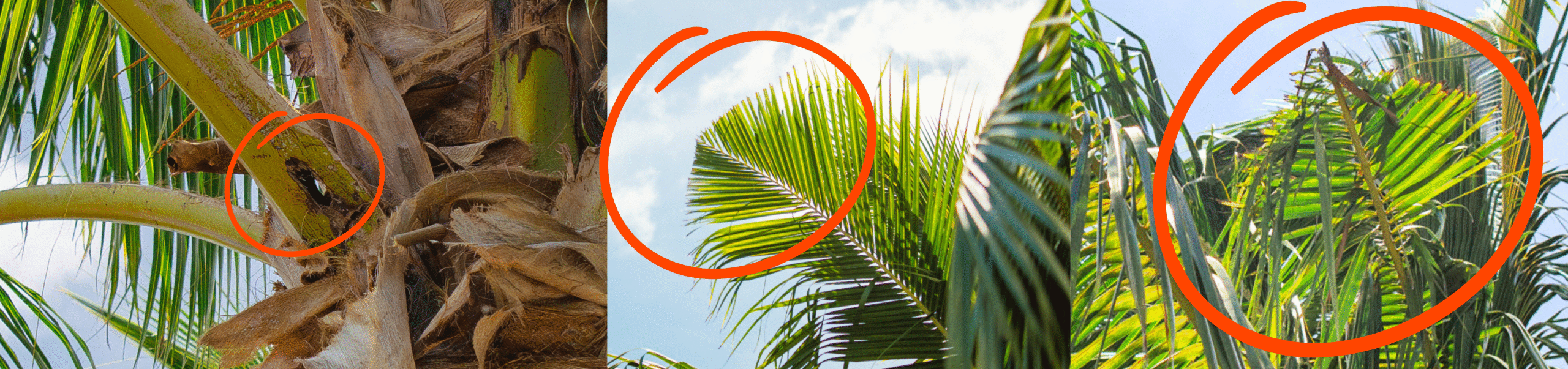
This is probably the easiest sign to recognize. You may notice large V-shaped cuts or notches along the leaves of a palm.
These cuts happen when CRBs feed on developing fronds inside the crown. As the leaves grow and open, the damaged sections become visible.
Once you recognize this pattern, it’s hard to miss on other palms.
2. Bore Holes Around the Palm Crown
Adult CRBs bore into the crown of a palm to feed on developing tissue. This can leave holes around the upper portion of the tree.
Depending on the height of the palm, these holes can be difficult to see from the ground.
3. Shredded or Damaged New Fronds
Sometimes the damage isn’t a clean V-shape. New fronds may open with torn, uneven, or shredded sections where beetles have fed.
If you notice similar damage appearing on multiple new fronds, it’s worth paying attention to.
4. Chewed Plant Fibers and Debris
As CRBs bore into palms, they can leave behind chewed plant fibers around their entry holes.
You may notice this material near the crown, although it isn’t always visible, especially on taller palms.
5. Declining Palm Crowns
With repeated feeding, CRBs can cause serious damage to a palm’s growing point.
You may notice fewer healthy fronds, damaged new growth, or a thinning crown. In severe cases, damage to the growing point can kill the palm.
What Do Coconut Rhinoceros Beetles Look Like?
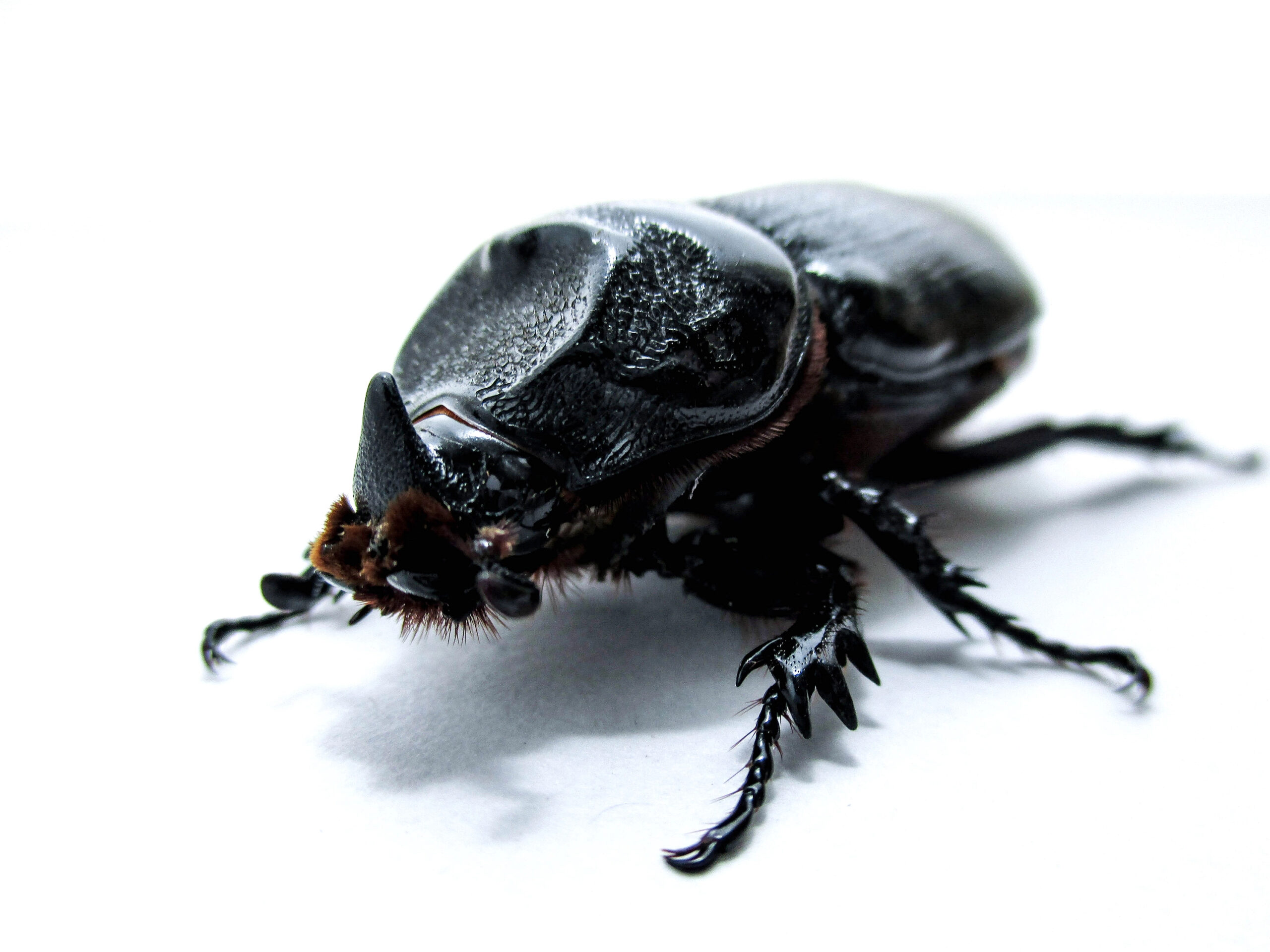
Adult CRBs are large, dark brown to black beetles, usually around 1–2 inches long, with a distinctive horn on their heads.
They’re mostly active at night, so it’s possible to have CRB damage without ever seeing a beetle.
Their larvae look completely different. They’re cream-colored, C-shaped grubs that develop in decomposing organic material like mulch, compost, and rotting vegetation.
These areas can become breeding sites for CRB, even if there aren’t visibly damaged palms nearby.
Noticing CRB Damage on Your Property?
Once you’re familiar with the signs, CRB damage becomes easier to recognize. But keep in mind that wind, other pests, and environmental conditions can sometimes cause similar damage to palm trees.
If you’re seeing V-shaped cuts, damaged new growth, or holes around the crown, it’s worth having your palms evaluated.
At Kilauea Pest Control, we help identify possible CRB activity and recommend treatment options to help protect your palms.
Contact Kilauea Pest Control to schedule an evaluation.