Bed bugs are one of the most frustrating household pests because they’re excellent at hiding. Many people don’t realize they have bed bugs until bites begin appearing or the infestation has already spread throughout the home.
Learning what bed bugs look like is one of the best ways to catch an infestation early. The sooner they’re identified, the easier it is to stop them from spreading to additional rooms or neighboring units.
Here in Hawaii, bed bug awareness is especially important. With frequent travel, hotels, vacation rentals, apartment living, and military housing, bed bugs can easily hitchhike from one location to another. They’re just as likely to be found in clean homes as cluttered ones.
In this guide, you’ll learn how to identify adult bed bugs, baby bed bugs, eggs, bites, common signs of an infestation, and where these pests like to hide.
What Do Bed Bugs Look Like?
If you’re wondering what do bed bugs look like, the short answer is:
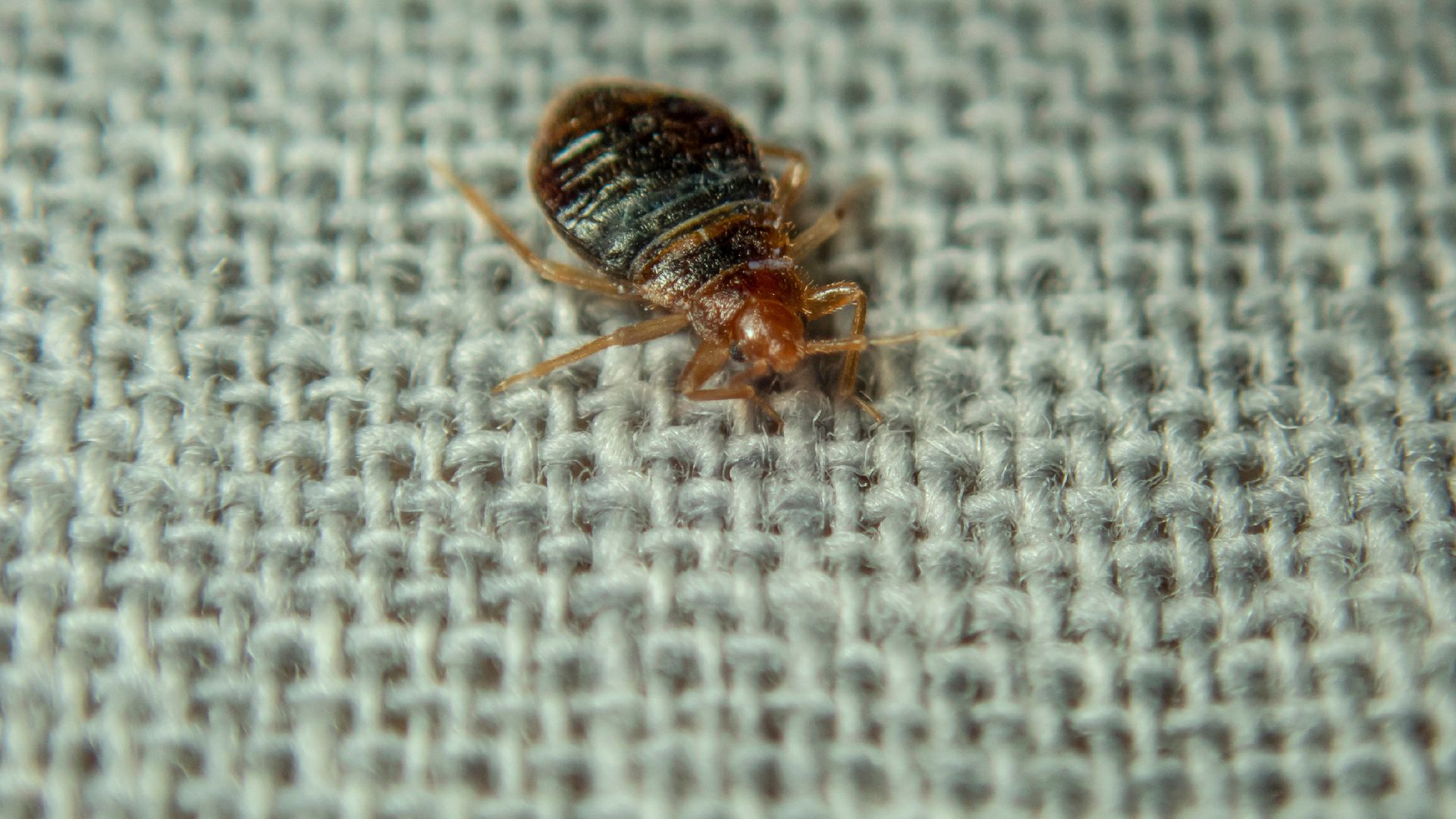
Adult bed bugs are small, reddish-brown insects about the size of an apple seed. They have flat, oval-shaped bodies, six legs, short antennae, and are visible without a magnifying glass. After feeding, their bodies become darker, swollen, and more elongated.
What Do Adult Bed Bugs Look Like?
Size
Adult bed bugs measure roughly ¼ inch (5–7 mm) long, making them about the size of an apple seed. Although small, they’re usually visible to the naked eye.
Color
Before feeding, adult bed bugs are typically a reddish-brown color. After consuming blood, they become noticeably darker and may appear almost mahogany in color.
Shape
Bed bugs have broad, oval-shaped bodies that are extremely flat when they haven’t eaten. This flattened body allows them to squeeze into tiny cracks and crevices that many other insects can’t access.
Unlike beetles, bed bugs don’t have hard wing covers or wings for flying.
How They Change After Feeding
One of the easiest ways to recognize a bed bug is how dramatically it changes after feeding.
After a blood meal, a bed bug becomes:
- Longer
- More swollen
- Dark red or burgundy
- Less flat than before
This change only lasts until the blood is digested.
What Do Baby Bed Bugs (Nymphs) Look Like?
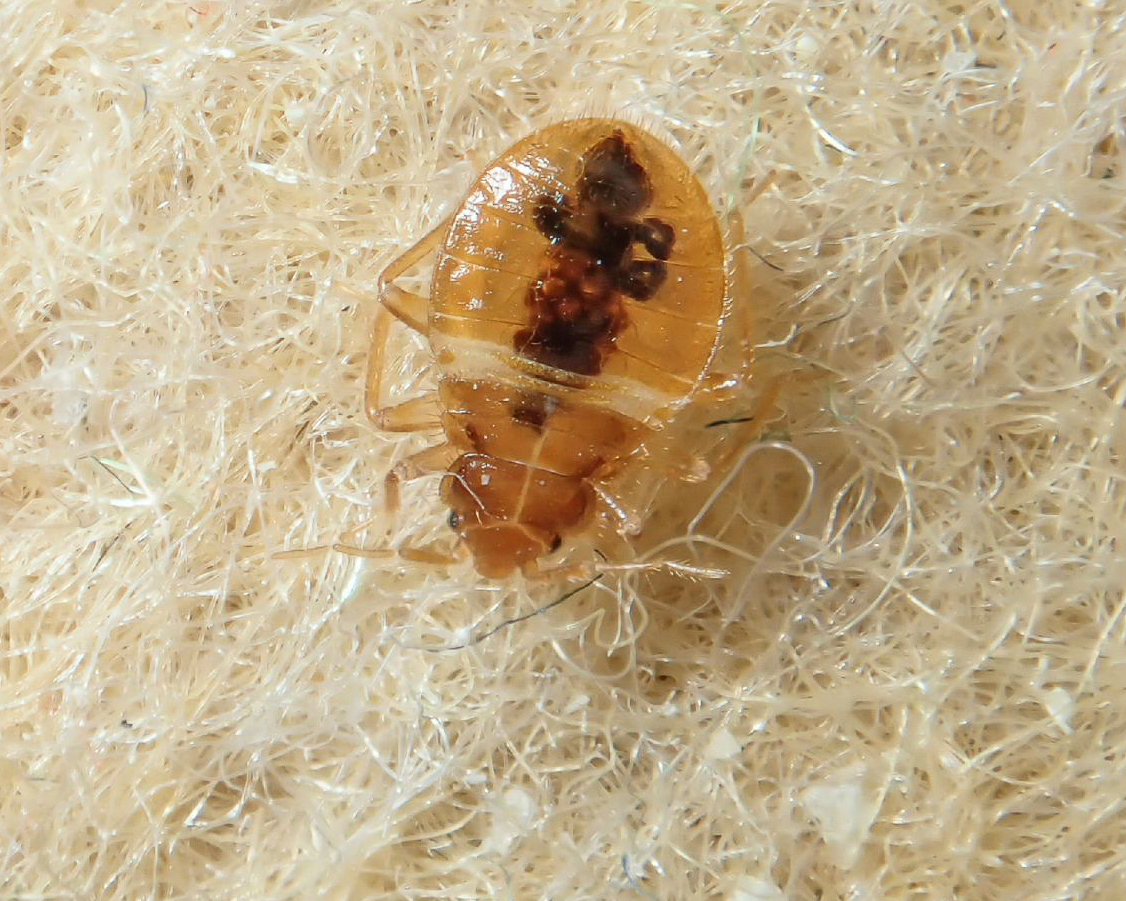
Baby bed bugs, called nymphs, look very similar to adults but are much smaller.
They’re often:
- About the size of a poppy seed when newly hatched
- Nearly transparent or pale yellow
- Difficult to spot on light-colored bedding
After feeding, their bodies turn bright red because the blood inside is visible through their translucent exoskeleton.
As they mature, nymphs shed their skin five times before becoming adults.
What Do Bed Bug Eggs Look Like?
Bed bug eggs are tiny and easy to overlook.
They are typically:
- About 1 millimeter long (roughly the size of a pinhead)
- White or pearl-colored
- Oval-shaped
- Slightly sticky, allowing them to adhere to surfaces
Female bed bugs usually lay eggs inside cracks and protected hiding spots, including mattress seams, furniture joints, and behind headboards.
Because of their size and color, eggs often blend into fabric or wood surfaces.
What Do Bed Bug Bites Look Like?
Bed bug bites can vary from person to person, making them unreliable for identifying an infestation on their own.
Common characteristics include:
- Small, red, itchy welts
- Groups or lines of multiple bites
- Bites on exposed skin such as the arms, neck, shoulders, or legs
- Itching that may not begin until hours or even days later
Some people experience no reaction at all, while others develop significant swelling.
Because mosquito bites, flea bites, allergic reactions, and other skin conditions can look similar, bites alone don’t confirm bed bugs. Instead, inspect your sleeping area for additional signs.
What Are the Signs of a Bed Bug Infestation?
Finding an actual bed bug isn’t the only indication you may have an infestation.
Other common signs include:
- Live bed bugs
- Shed exoskeletons (cast skins)
- Tiny white eggs
- Small black fecal spots on mattresses or furniture
- Rust-colored blood stains on sheets or pillowcases
- A sweet, musty odor in larger infestations
The more of these signs you notice together, the more likely bed bugs are present.
Where Do Bed Bugs Hide?
Bed bugs spend most of the day hiding close to where people sleep or rest.
Common hiding places include:
- Mattress seams
- Box springs
- Headboards
- Bed frames
- Upholstered furniture
- Nightstands
- Baseboards
- Behind electrical outlet covers
- Luggage
- Backpacks
- Suitcases
Although they’re called bed bugs, they aren’t limited to beds. As infestations grow, they spread throughout nearby furniture and wall voids.
Common Bugs Mistaken for Bed Bugs
Several insects are commonly mistaken for bed bugs.
| Pest | How It Differs |
| Carpet beetles | Rounder bodies with patterned shells and tiny hairs |
| Fleas | Smaller, darker, and capable of jumping |
| Baby cockroaches | Longer bodies with noticeable antennae and faster movement |
| Ticks | Eight legs instead of six and no antennae |
If you’re unsure which insect you’ve found, a professional inspection can help prevent unnecessary treatments.
Are Bed Bugs Common in Hawaii?
Yes. Bed bugs are found throughout Hawaii.
Because the islands welcome millions of visitors each year, bed bugs are regularly introduced through luggage and personal belongings. They’re commonly encountered in:
- Hotels
- Vacation rentals
- Apartments
- Condominiums
- Military housing
- College housing
It’s important to remember that bed bugs aren’t attracted to dirt or poor housekeeping. They simply seek places where people sleep, making any home or business susceptible.
What Should You Do If You Find Bed Bugs?
If you suspect bed bugs, don’t panic.
Instead:
- Try to capture a specimen if it’s safe to do so.
- Wash bedding, clothing, and linens in hot water.
- Dry items on the highest heat setting recommended for the fabric.
- Avoid moving furniture between rooms, which can spread the infestation.
- Don’t immediately throw away mattresses or furniture unless advised by a professional.
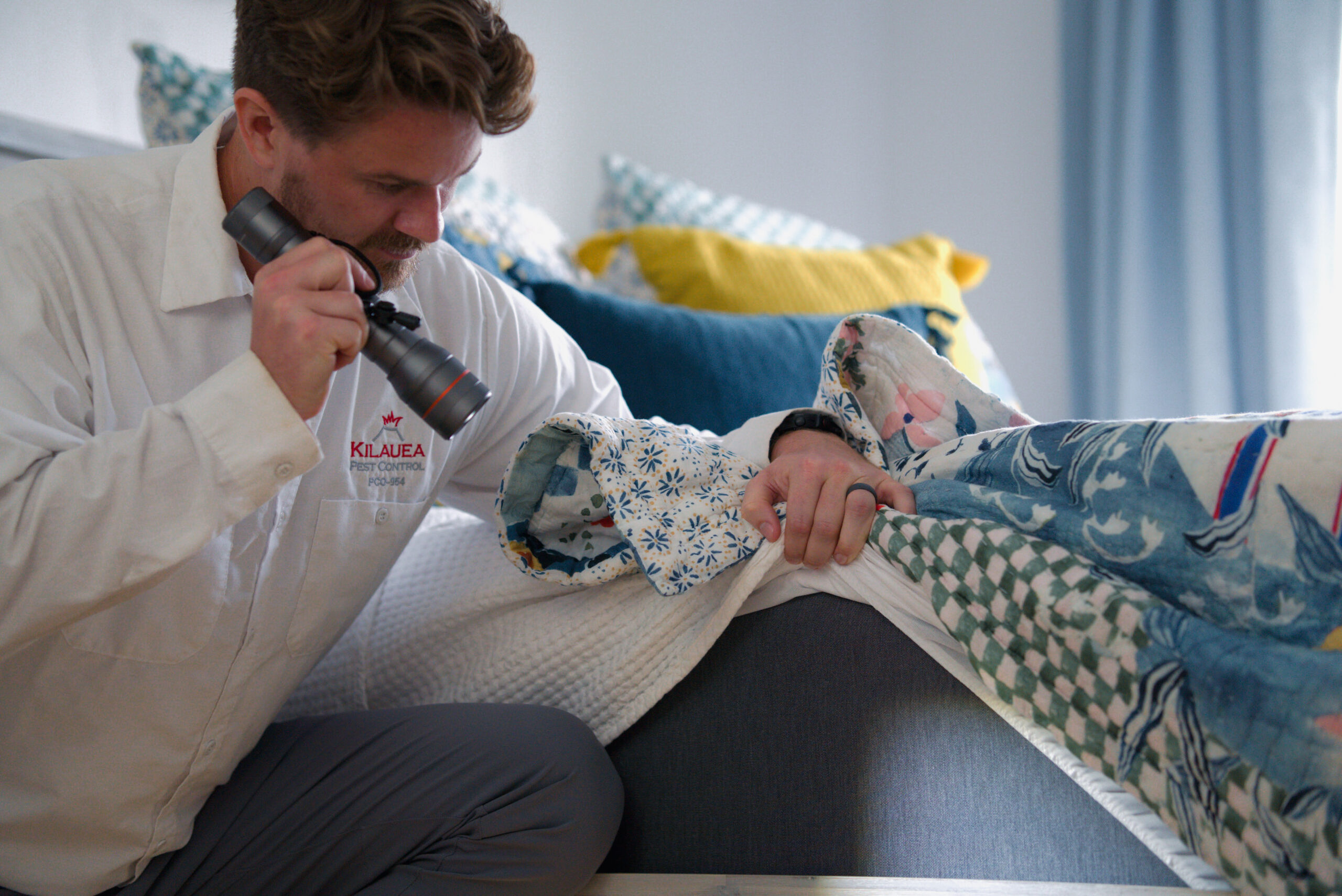
- Schedule a professional inspection to confirm the problem and determine the best treatment plan.
Know What to Look For—and Act Early
Identifying bed bugs early can make a significant difference in preventing a larger infestation. Adult bed bugs are reddish-brown, flat, and about the size of an apple seed, while baby bed bugs and eggs are much smaller and easier to miss. Looking for additional signs like shed skins, dark fecal spots, blood stains, and common hiding places can help you determine whether it’s time for a closer inspection.
If you think you’ve found bed bugs in your Hawaii home, apartment, hotel, or vacation rental, the team at Kilauea Pest Control can help identify the problem and recommend the appropriate treatment plan. Contact us today to schedule a professional bed bug inspection before the infestation has a chance to spread.